
Dean Putland, Senior Product Manager
Your diary might look full but that doesn’t always mean your day is working well. In private practice, it’s easy to feel busy from start to finish. Appointments are booked, the schedule is full and yet the day doesn’t always flow the way you’d expect.
In many private healthcare settings, managing appointments and diary scheduling can quickly become more complex than it should be. And even when everything looks organised on screen, the day can still feel harder to manage than it needs to be. Because if your schedule isn’t working, then being busy isn’t productive – it’s wasted time.
Why your private practice diary can let time slip
A packed schedule can give the impression everything is running smoothly. But behind the scenes, it’s often a different story. In private practice, it’s rarely one obvious issue. It’s lots of small inefficiencies that build up over the day:
- Gaps between appointments that never quite get filled
- Last-minute cancellations that leave empty slots
- Time spent juggling availability across different systems
- Admin tasks interrupting clinic sessions
- Overbooking to compensate for no-shows, then scrambling when everyone turns up
Individually, these things don’t feel like a problem. But together, they create a day that feels busy without actually being productive. You’re constantly adjusting, switching and reacting – instead of working from a schedule that’s supporting you. And that’s where time really starts to slip.
Getting more from your day starts with better scheduling
When your diary works properly, everything feels easier. You’re not constantly reacting to changes or trying to squeeze things in. Instead, your day has structure, flow and a sense of control.
That doesn’t mean doing more. It means making better use of the time you already have. With the right scheduling in place:
- Time is used more efficiently, with fewer gaps
- Your day flows without constant interruptions
- Changes are easier to manage without disrupting everything else
- You spend less time managing bookings and more time focusing on patients
- And just as importantly, it feels different. Less rushed. Less reactive. More in control.

Common questions about managing your practice schedule
Here are a few of the questions that come up most often – and what makes a difference.
- How can private practices manage their diary more effectively?
A well-managed diary is built around clear scheduling, visibility and flexibility. Using tools that keep appointments, availability and workflows in one place helps reduce admin and improve efficiency. - How do you reduce gaps in a practice schedule?
Reducing gaps comes down to better visibility, flexible scheduling and managing cancellations quickly. Systems that allow real-time updates and easier rebooking help keep diaries full and avoid the extra admin around invoicing and payment follow-ups.
- What is the best way to reduce missed appointments in private practice?
Missed appointments are often caused by a mix of communication and scheduling issues. While reminders help, having a flexible and responsive scheduling setup makes it easier to fill gaps quickly when they do happen. It’s not just about scheduling – it’s about how well those appointments are supported by clear, timely communication. - How does scheduling software improve efficiency in healthcare?
Scheduling software improves efficiency by reducing manual admin, giving clear visibility of appointments and helping practices make better use of available time.
What to look for in scheduling software for private practice
If you’re reviewing your current setup or thinking about something new, here’s 5 things make a real difference.
- Ease of use – if it’s not simple, it won’t get used properly
- Visibility of your day – a clear, real-time view of your diary helps you stay in control
- Workflow support – scheduling should fit around how your practice works, not the other way around
- Flexibility – practice sessions, changes and availability should be easy to manage without disruption
- Integration across your practice – the biggest gains come when everything connects, not when systems work in silos
Smart medical practice management software brings all of this together – connecting your diary to the wider practice so everything runs more smoothly.

How ePractice helps you take control of your day
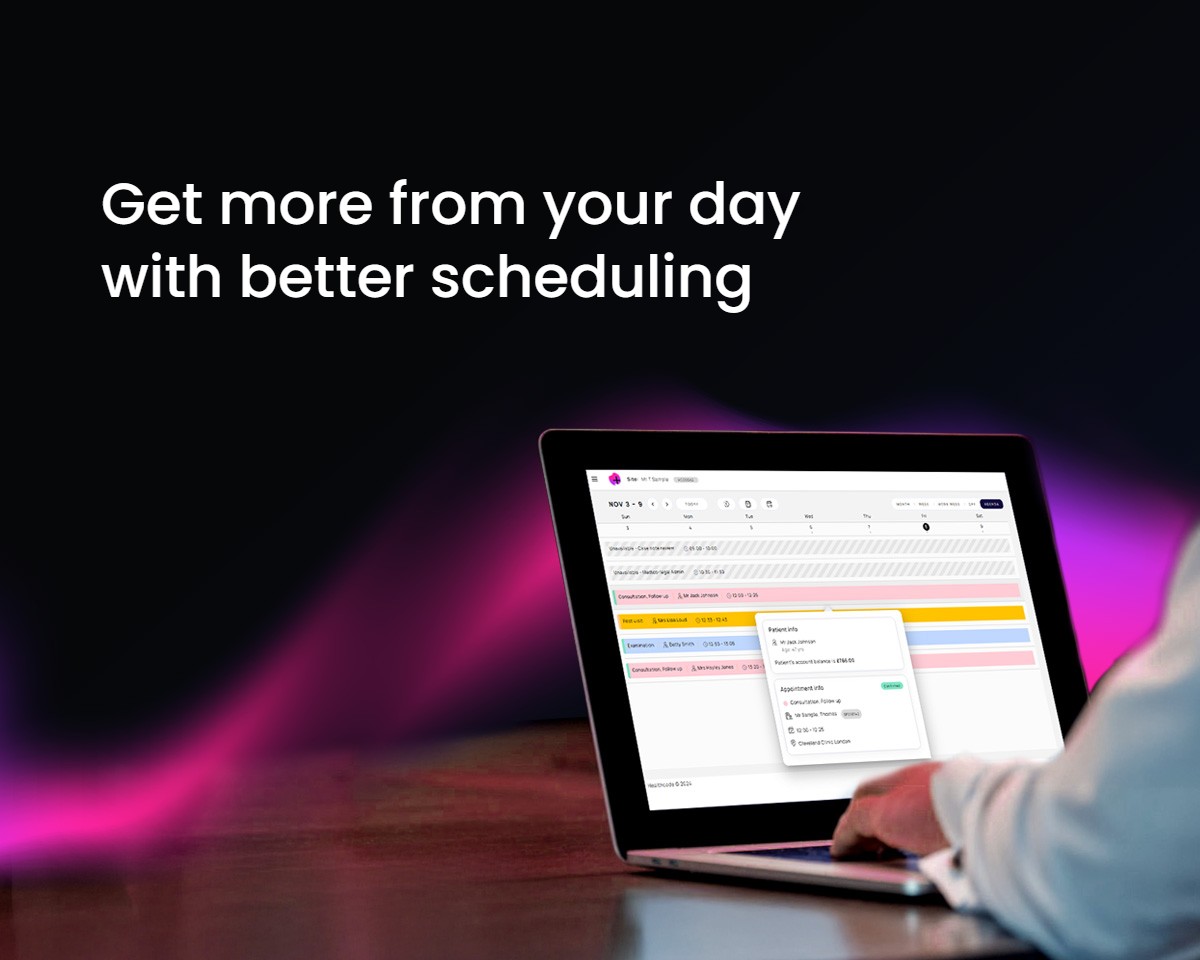
This is exactly what the scheduler features in ePractice are designed to do.
Instead of managing appointments across multiple systems and processes, you can plan clinic sessions, manage availability and keep appointments flowing smoothly, all from a single system. That means:
- Fewer gaps and better use of your time
- Less admin managing bookings and changes
- Clear visibility across your diary
- A schedule that adapts without disrupting your day
See ePractice in action
Built on 25+ years of healthcare technology expertise and powered by Healthcode Intelligence (Hi), ePractice cuts out the friction – less switching, less admin and fewer gaps – so you can be the best you can be.
Book a 30-minute demo and see how ePractice helps you take control of your schedule, make better use of your time and keep your day running smoothly.
Sources
1. NHS England, Did Not Attend statistics https://www.england.nhs.uk/outpatient-transformation-programme/did-not-attends-dnas/