
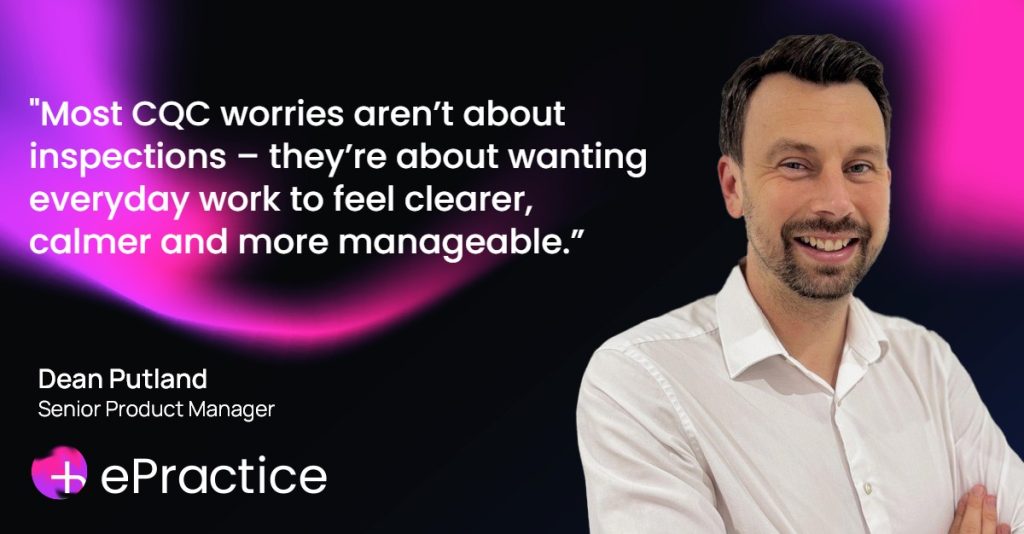
By Dean Putland, Senior Product Manager
Customers are telling me that CQC regulations are a hot topic right now. Not because anything’s changed overnight but because private practices are looking for reassurance and practical ways to feel calmer, more organised and more in control.
When you’re running a busy private practice, the CQC can seem like the least of your worries, and while I’m not a CQC advisor, I do help teams stay focused on delivering great patient care. The good news is that you can do both by putting simple systems and workflows in place to reduce stress and make every day working life feel more manageable.
Why CQC regulations feel like a hotter topic right now
A few things are happening at the same time.
Private healthcare continues to grow and evolve. More patients are choosing to self‑fund care and expectations around speed, transparency and quality are rising. At the same time practices are doing more – offering more services, more coordination, producing more data and requiring more admin.
The CQC’s Single Assessment Framework has been around for over a year now and this set the scene for continuous, evidence-led assessment, rather than a single periodic inspection. The core questions remain familiar – Safe, Effective, Caring, Responsive, Well‑led – but what feels different now is how readiness must be part of your every day thinking.
Practices are increasingly aware that compliance comes from being able to show how things work day to day rather than gearing up for a one‑off moment. In 2026, readiness feels more like having the confidence of knowing all the answers are at your fingertips rather than having to panic for that once-in-a-while event – and that shift is a big reason CQC regulations are coming up more often in conversations.
The questions private practices are really asking
The conversations I have are rarely about regulations or inspection mechanics. They are about confidence and control.
Common themes I hear include:
- If we needed to pull information together quickly could we do it calmly?
- Are our processes consistent across practitioners and sessions?
- Are we too reliant on individuals, spreadsheets or workarounds?
- Do our systems support safe joined up care without slowing people down?
- How do we reduce admin without losing visibility?
Underneath all of this is one very human concern. Teams are already busy. Practitioners are already stretched. No one wants worries about systems or readiness to distract from patient care or spill into evenings and weekends.
What actually helps practices feel calmer and more prepared?
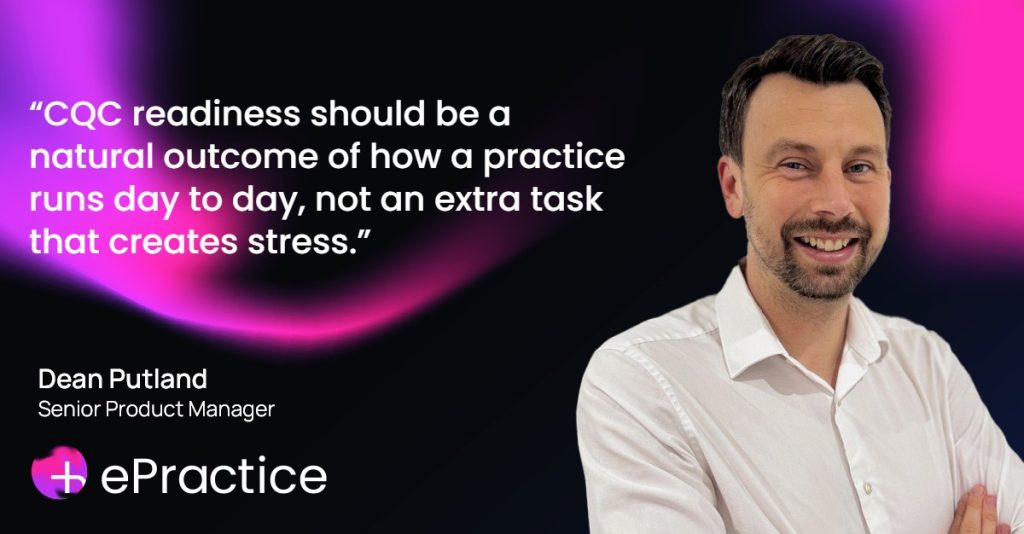
From what I see, confidence doesn’t come from adding more internal policies or checklists – the CQC now have reduced tolerance to over-reliance on these anyway. It comes from clarity and consistency.
Practices that feel more in control tend to have:
- Clear workflows that guide what needs to happen and when
- Consistency across the team so care does not vary unnecessarily
- Systems that make information easy to find
- Less reliance on memory, inboxes or manual tracking
- Tools that save time rather than create more work
When those foundations are in place readiness becomes part of normal working life rather than something sitting in the background creating pressure and the CQC’ll look to your day-to-day performance as the inspection, not an addition.
Three practical things you can do to reduce CQC‑related stress
This is often the most useful part of the conversation so it’s worth being specific.
1. Pick one key care process and look at consistency
Choose something common like consultations, prescribing, follow‑ups or routine reviews. Ask:
- Does everyone do this the same way?
- Are the steps guided by the system or written down?
- Could someone new understand how this works?
If the answer is “it depends who’s on shift” that’s usually the best place to start.
2. Reduce reliance on memory or individuals
If a process lives mainly in someone’s head, inbox or on a spreadsheet it creates both risk and pressure. Moving just one of those into a shared workflow or system can immediately make things feel calmer for the whole team.
3. Test how easy it is to evidence what you already do
Without thinking about an inspection simply ask:
- Can I quickly see what happened for a patient from start to finish?
- Can I explain our process confidently without caveats?
- Can I find answers without digging through multiple systems?
You’re aiming for clear and calm rather than perfect.
How Healthcode solutions can help in practice
The best ideas come from real‑world use and honest conversations about where pressure builds. Our role is to reduce friction and help teams get more time back in their day so they can focus on patient care.
Here’s a few practical examples.
ePractice Care Pathways – consistency without complexity
Care Pathways in ePractice are designed to bring structure to everyday care without adding burden. They allow practices to build simple guided workflows that support consistent care across practitioners and sessions. This helps reduce variation, improve coordination and make it easier to show how care is delivered day to day.
By removing guesswork teams can spend less time worrying about process and more time with patients. In the short clip below my colleague Desné talks through how Care Pathways support consistent care and help practices feel more confident about the way that care is evidenced day to day..
Safer prescribing workflows that support good care
Areas like prescribing naturally carry more complexity and risk. Embedding these workflows into ePractice reduces reliance on memory and manual chasing. Clear joined up processes support safety while also freeing you from unnecessary admin. That balance matters.
A quick note on the wider Healthcode ecosystem
Alongside ePractice there are other Healthcode solutions that support the same goal – helping practices feel informed organised and in control.
Tools like The PPR, Claims Management and ICE improve visibility and connectivity across the patient and business journey. They’re built hand in hand with customers and backed by 25+ years of experience in private healthcare, with strong foundations in data management and stability. All of this is powered by Hi (Healthcode Intelligence), helping deliver smart solutions that work for practices today and will continue to evolve for the future.
A final thought
Most conversations about CQC are not really about regulations or inspections.
They’re about reassurance control and peace of mind. About knowing that the way a practice runs day in, day out supports great care without unnecessary stress sitting in the background.
Good systems do not replace good practitioners. They support them quietly, consistently and reliably so the focus stays exactly where it should be – on patients.
Want to see how ePractice works day to day?
If you’d like to see how ePractice can support clearer workflows reduce admin and help your practice feel more organised and confident we’d be happy to show you.
Book a demo of ePractice to see how it could work for your practice.